The first anti-Mormon I encountered was a guy on my high school campus handing out legal size flyers, both sides of which were covered with questions about Mormonism. The man truly looked like a drug addict. Most students that took flyers tossed them in the nearby trashcan. Before long, the school's resource officer ushered the guy off campus for violating public policy regarding distribution of materials at a school.
Later that day a couple of students brought copies of the flyers to seminary class. My seminary teacher admonished students to disregard and not even read anything written on the flyers. Most took his advice. But after class I talked with one classmate that had some real concerns about some of the items on the paper. A couple of other students slammed him for even entertaining such questions. I could see that he was frustrated. Was there no room in the religion for honest inquiry?
Since that time, I have known a number of people that have experienced a crisis of faith. Many of them have grappled with doubts based in the church's claims to truth. Many that know me—even my most intimate associates—might be surprised to learn that I too have struggled through a crisis of faith. Although I am a habitual journal keeper, I kept the matter so close that I didn't even write much about it in my journal.
The recent FAIR conference addressed doubt, shaken faith, the ways people leave the church, and even some of the ways that people return to the church. Some of the addresses I found interesting included Michael R. Ash's presentation about his book, Shaken Faith Syndrome; Seth Payne's talk about ministering to those struggling with doubt; and a discussion among four scholars that each had gone through a major faith crisis. At least three of those in the discussion had left the church but had subsequently returned.
I also found Rosalynde Welch's Disenchanted Mormonism presentation quite captivating; although, my own experience significantly differs from hers. Welch paints herself as a faithful Latter-Day Saint that has gone through life with little connection to the spiritual and mystic elements of the religion. She admits that her case might seem odd, given that the church is founded on and emphasizes the modern importance of spiritual events. But she seems to revel in the earthly value of various church practices and sociality.
Welch floats an intriguing idea about belonging. Namely, that individuals already either belong or do not belong to various groups and organizations, whether they know it or not. Their job is to discover where they fit. In this scenario, individual will is somewhat reduced from the modern Western understanding of individuality. I'm not sure where I come down on this idea. It's just a provocative thought.
Although Welch says that she does not discount the doubt->crisis model, she seems to suggest that it is too self-centric. The individual becomes his own god (my words, not hers) rather than humbly accepting "the limits of our intellectual and moral mastery." (Incidentally, Ralph Hancock provides a compelling argument against currently ascendant ultra individualism in this presentation.) Indeed, Don Bradley, who left and then later returned to the church, says in the round table discussion, "I am content now to let God be God and I’ll be Don."
My description may sound as if Welch is arguing for an uncritical approach to faith. I think that is not the case. Her presentation paints a more complex picture than that. It's worth reading and thinking about. At any rate, her presentation helped me better understand fellow worshipers that do not experience the spiritual as I do.
Several presenters asserted that too much rigidity in one's views of the church, its history, its people, and its doctrines lies at the root of most faith crisis situations. Even the most scholarly individual has some inflexible views that are founded in partial truths and faulty assumptions. When presented with evidence (or even supposed evidence) that seems to directly challenge views that underlie critical foundations, a faith crisis can result. (Note that presenting challenging information is fairly easy, while delving into a proper answer is often very complex.)
Many that experience such a crisis deal with it silently, as I did. They may be unaware that others have already grappled with and have expertly answered many of their questions. (See FairMormon.org, for example.) Since a significant part of their identity and position in life is tied to the church, many are reticent to expose their doubts to others. They may (with some justification) fear that they will be treated in alienating rather than loving ways. Other church (and even family) members may naturally react with revulsion in an effort to inoculate themselves against the faltering faith of the doubter.
While my experience includes some common elements of shaken faith, I eventually came to understand that my doubts were secondary to my real crisis.
I had over a period of several years explored my personal political philosophy. During this period, I assumed alliances with some groups that seemed to share some of my understanding. As I did so, I uncritically adopted other views espoused by these groups, as if this was required of one with my political identity. (Faulty reasoning: if I agree with group X about A, and group X believes B, I must also believe B.)
As I increasingly became involved in debating this constellation of political views, I developed very un-Christ-like sentiments toward some with opposing views. The more I did this, the more I experienced seemingly imperceptible changes in my private religious practices. My prayers became less fervent and more rote. Personal scripture study suffered. Efforts to repent became less frequent and less sincere. Those with whom I disagreed became objects rather than children of God. (See 1 John 4:20.)
Although I was still doing all of the outward things that good and worthy members of the church do, fulfilling my callings, serving others, etc., I had allowed some significant chinks in my armor to go unaddressed. About this time I was exposed to some historical information that didn't fit with my (fairly well studied) view of church history. This even came from friendly, relatively orthodox sources.
I was weak, so doubts were more easily sowed. The more I mused on these doubts the more I felt like I was just going through the motions of church membership with a kind of internal emptiness. But my concerns felt very real and very significant.
I can't really say why this happened, but one day I experienced a moment of reflective clarity. I realized that I had become more certain about my politics than about my religion. I had been defending political ideas that I didn't really believe. Maybe politics was even becoming my religion.
Somehow I was able to step back and look at what was happening to me. I didn't like what I saw. I considered what I really knew deep within and what was really important to me. There were some bedrock matters that I could not deny that made my doubts pale into insignificance.
In a flash, I divorced myself from political debate. (I'm not suggesting that this would be the right step for anybody else.) I began re-examining my religious faith and my political views, giving the former preeminence over the latter. My relationship with God and with others began to improve at that moment. That was only the beginning. Over time my religious understanding has gained new stability while my political views have evolved significantly.
Although answers to my religious doubts did not immediately appear, I felt the Spirit prompting me to be still and patient. Over time I found answers to some concerns. I am still waiting for others. But that doesn't bother me at all. I have become reconnected to God in a way that puts these matters into perspective.
Like Janet Eyring said in the linked round table discussion, scripture study and the sacrament have become richer experiences for me because "you see your own self, you know you’re fallen. You know your flawed self in scriptures that you didn't see when you were younger." She is saying that you better understand how much you need Christ. Although they're not in the current version of the LDS Hymnal, I experience the hymns Come Thou Fount of Every Blessing and Amazing Grace with personally poignant insight that was previously lacking.
Seth Payne's ideas about reaching out to those struggling with a crisis of faith are valuable. Unfortunately this kind of internal strife may not be readily apparent to us, just as my struggles were likely invisible to others. This kind of care and ministering requires spiritual discernment that is rarely experienced unless diligently sought.
The validity of Rosalynde Welch's postulation on belonging might be questionable, but it has been made powerfully clear to me that I am where I belong. And I'm happy; much happier than when I was excessively focusing on real and imagined flaws.
I am not the last seemingly stalwart church member that calls his own basis of faith into question. I pray for those that are dealing with or that will deal with this kind of thing because I know that, as the hymn says, "Dear are the sheep that have wandered Out in the desert to pine."
Wednesday, September 18, 2013

Monday, September 16, 2013
Should a Child be His Parent's Biographer?
A few years ago after my dad passed away, I wrote a series of blog posts about him. The posts were not really planned. I just dashed off what came into my head at the time. At the request of family members, I put the posts together in a PDF document and shared it with family members.
I never felt that the document was well received. My mom said that I had some facts wrong. A number of times I pressed her for help in remedying any factual errors, but she would always change the subject. Eventually I came to sense that Mom didn't really have issues with my facts; just with my tone, tempo, and treatment.
This is to be expected. After all, even the best biography is strongly colored by the biographer's personal view. And that view is bound to differ in significant ways from the views of others that knew the subject well.
Other family members provided little feedback on my document. Most of them probably never bothered to read it. I'm not sure I can blame them. One of my cousins spent years putting together a book about my grandparents. My several attempts to read it have always ended in an evaporation of interest.
Still, I have long thought about writing a more detailed biography of my father. He was a unique man with an interesting life story. Earlier this year I told of several events from Dad's life at a family gathering. Some family members encouraged me to write them down. Most of these episodes are recorded in my personal journal, but I have (understandably, I hope) not made that publicly available.
Dad refused to record a personal history during his life. He claimed that all such works he had seen were entirely too self serving and unbalanced. I'm not sure whether he lacked confidence in his ability to overcome this common error. But he certainly saw no value in writing a history.
My father told me more than once that most people's histories should be embodied in what is personally experienced by those with whom they have contact. The personal history thus becomes a diffused thing that necessarily dies out with the passing of those individual memories. Dad noted that most of our ancestors had, like most people that have lived on this earth, passed into anonymity. He saw no reason that he should be so arrogant as to think that his story somehow merited more attention than theirs. "No one will care about it after two generations anyway," he said.
Still, I felt compelled to write Dad's biography. I undertook the task a few months ago. I finished the 60+ page text over the weekend. I asked my wife, who is an avid reader, to proofread the document. "A fool" I told her, "is his own proofreader." She helped me ferret out some errors and fix formatting. But she didn't provide a lot of feedback on the content.
Is it balanced? Did I forget anything important? Does it have offensive passages? "It's fine," my wife assured me. Perhaps the best feedback I got was when I walked into the office while she was reading and saw her wiping tears from her eyes. At least some sections of the work are poignant enough to elicit such a response.
I have included a few photos. But I want to add more photos before I complete the work and send it out to family members. Most of the pictures are in Mom's possession. It will take some time to go through volumes of photos and determine which ones to scan and include.
Although I am happy to have completed the initial draft of the text, I must admit that I am somewhat reticent to share it with family members. As noted above, each family member has his own view that necessarily differs from mine. The work also contains personal information about people that are still living. Some of this could be rather sensitive, such as how Dad dealt with my brother's failing marriage. Will some want me to redact such information? Would Dad's story be sufficiently complete without it?
In response to these concerns, my wife suggests that each family member is free to write his own biography or to record his own memories of Dad. True. But I don't wish to unnecessarily cause familial disharmony. In fact, my goal is to help others remember and appreciate Dad.
Some have claimed that children tend to make very poor biographers for their parents because of the complex relationship that tends to exist between parent and child. This may be true and I may be unable to escape this curse. But frankly, I am likely the only one that would ever undertake writing Dad's biography. It's either this or nothing. And in my opinion, the biography I have written is better than nothing.
Wednesday, September 11, 2013
Football Season Returns: Spare Me!
Gaaaa! It's that time of year again! I was starkly reminded of this fact last Saturday when I was out with one of my sons. He happened to be wearing a bright red Utah Utes T-shirt. Now, this boy happens to know nothing about University of Utah athletics. The shirt is an artifact of a successful bargain hunt.

My magnificent wife has done yeoman's work over the years making sure that our family has regular portrait photos taken. During their formative years each child has portraits taken near his or her annual birthday. This makes for a good family history record.
Family portraits are a bit different than individual photo sessions. My wife carefully plans what each family member is to wear to ensure a visually pleasing collage. Sometimes we're casual; sometimes formal.
Last year my wife planned for our final family portrait before shipping sons off on missions. One son that is currently serving a mission was studying nuclear physiology at the U of U. Why the U of U? It's the only university in Utah that has a nuclear reactor. He considered out of state universities but opted to stay in Utah.
Our aspiring nuclear physicist enjoyed his time at the U, but he cared not one whit about U of U sports. "Could somebody explain to me again how the university's sports program improves my education?" he would ask.
One fine day my wonderful wife was perusing the clearance offerings in a store. It seems that she cannot pass a rack or a shelf labeled "Clearance" without stopping to look for deals. Suddenly the answer to her dilemma about the wardrobe for the family's upcoming photo session presented itself in the form of Utah Utes T-shirts for only $4 each. The bright red background with the bold white letters and logo would look perfect in the outdoor setting. And besides, we did have a son attending the university.
I'm afraid that I failed to act sufficiently enthused when my wife showed me her frugal find. I'm not a sports guy. I just don't understand it. I can't figure out why I'm supposed to feel engaged in games played by people I don't even know. How is a sports team's performance supposed to impact my life in any functional way? The fact that some of these people are athletic celebrities sways me not one bit. To me the whole thing seems like a modern throwback to tribal brutality. It's like some kind of bizarre state sponsored religion that has its own rituals, holy days, and forms of worship.
But I didn't put up too much of a fuss. For months now I have had on my desk at work a lovely portrait of all seven members of our family clad in Utah Utes T-shirts. Although, to be honest, it kind of galls me to have co-workers think that I am somehow a U of U fan.
Back to last Saturday. My son and I were approached by one of the workers at the establishment we were visiting. She kindly asked about my son's T-shirt. He replied, "I'm not really a fan. It's just the shirt that came up in the rotation this morning."

The worker pushed aside her apron to reveal a BYU logo emblazoned on her dark blue T-shirt. "Well, I'm wearing this shirt to support my team today," she proudly announced.
Dread crept over me as it suddenly dawned on me that it was football season. I guess I should have had fair warning. School has started and the fall colors are coming on. But with my high degree of apathy for football coupled with the fact that I have no kids involved in the sport, I had been going along blissfully ignorant until I found myself in the middle of a tribal rivalry.
I looked around and realized that several other patrons of the establishment were clad in various styles of officially licensed BYU clothing. I wanted no part of this rivalry. I wanted nothing to do with football. I wanted to get out of the place.
By the way, exactly what is wearing something devoted to 'your team' on game day supposed to do? Is it supposed to help the team perform better or something like that? Whoa, that's superstitious. Or is it merely stating one's tribal affiliation so that you know who to like and who to dislike? Which circles back to the whole tribal mentality thing. Maybe I'm just sports impaired. I just don't get it. Moreover, I don't want to get it.
Anyway, my son and I were soon on our way. It's not like we were bullied or beat up by cheerful BYU fans. Neither of us knew nor cared about which games were being played that day. But after getting home I went to my closet and shuffled my portrait worthy Utah Utes T-shirt in the stack to make sure that it won't come up in the rotation until after football season is over.
My magnificent wife has done yeoman's work over the years making sure that our family has regular portrait photos taken. During their formative years each child has portraits taken near his or her annual birthday. This makes for a good family history record.
Family portraits are a bit different than individual photo sessions. My wife carefully plans what each family member is to wear to ensure a visually pleasing collage. Sometimes we're casual; sometimes formal.
Last year my wife planned for our final family portrait before shipping sons off on missions. One son that is currently serving a mission was studying nuclear physiology at the U of U. Why the U of U? It's the only university in Utah that has a nuclear reactor. He considered out of state universities but opted to stay in Utah.
Our aspiring nuclear physicist enjoyed his time at the U, but he cared not one whit about U of U sports. "Could somebody explain to me again how the university's sports program improves my education?" he would ask.
One fine day my wonderful wife was perusing the clearance offerings in a store. It seems that she cannot pass a rack or a shelf labeled "Clearance" without stopping to look for deals. Suddenly the answer to her dilemma about the wardrobe for the family's upcoming photo session presented itself in the form of Utah Utes T-shirts for only $4 each. The bright red background with the bold white letters and logo would look perfect in the outdoor setting. And besides, we did have a son attending the university.
I'm afraid that I failed to act sufficiently enthused when my wife showed me her frugal find. I'm not a sports guy. I just don't understand it. I can't figure out why I'm supposed to feel engaged in games played by people I don't even know. How is a sports team's performance supposed to impact my life in any functional way? The fact that some of these people are athletic celebrities sways me not one bit. To me the whole thing seems like a modern throwback to tribal brutality. It's like some kind of bizarre state sponsored religion that has its own rituals, holy days, and forms of worship.
But I didn't put up too much of a fuss. For months now I have had on my desk at work a lovely portrait of all seven members of our family clad in Utah Utes T-shirts. Although, to be honest, it kind of galls me to have co-workers think that I am somehow a U of U fan.
Back to last Saturday. My son and I were approached by one of the workers at the establishment we were visiting. She kindly asked about my son's T-shirt. He replied, "I'm not really a fan. It's just the shirt that came up in the rotation this morning."
The worker pushed aside her apron to reveal a BYU logo emblazoned on her dark blue T-shirt. "Well, I'm wearing this shirt to support my team today," she proudly announced.
Dread crept over me as it suddenly dawned on me that it was football season. I guess I should have had fair warning. School has started and the fall colors are coming on. But with my high degree of apathy for football coupled with the fact that I have no kids involved in the sport, I had been going along blissfully ignorant until I found myself in the middle of a tribal rivalry.
I looked around and realized that several other patrons of the establishment were clad in various styles of officially licensed BYU clothing. I wanted no part of this rivalry. I wanted nothing to do with football. I wanted to get out of the place.
By the way, exactly what is wearing something devoted to 'your team' on game day supposed to do? Is it supposed to help the team perform better or something like that? Whoa, that's superstitious. Or is it merely stating one's tribal affiliation so that you know who to like and who to dislike? Which circles back to the whole tribal mentality thing. Maybe I'm just sports impaired. I just don't get it. Moreover, I don't want to get it.
Anyway, my son and I were soon on our way. It's not like we were bullied or beat up by cheerful BYU fans. Neither of us knew nor cared about which games were being played that day. But after getting home I went to my closet and shuffled my portrait worthy Utah Utes T-shirt in the stack to make sure that it won't come up in the rotation until after football season is over.
Monday, September 09, 2013
Trail Life USA Offers a Scouting Alternative to the Boy Scouts of America
In a June 3 post about the BSA's decision to stop excluding gay Boy Scouts, I opined that some conservative churches that have traditionally sponsored BSA units may opt to start their own scouting organization. The Deseret News is reporting that this took place last Friday when "a group of Christians ... formed an alternative, faith-based scouting organization called Trail Life USA."
The Christian Post reports that "Trail Life USA is modeled after the American Heritage Girls." AHG was founded by a group of Christian moms in 1995 to offer a "Christ centered" alternative to what they saw as an increasingly secularized Girl Scouts program. Per Wikipedia AHG now has units throughout the United States with a total membership of just under 21,000 youth and adults.
The Christian Post reports that TLUSA was launched by more than "1,200 former BSA officials, parents and youth representing 44 U.S. states," and that the organization expects to have a nationwide program up and running by next January. But founder John Stemberger admits, "Most of us are coming from a highly-structured environment that has 103 years of culture and language and program and symbols … and we are starting from scratch."
The D-News article bears the attention grabbing headline, "End of Boy Scouts? Christian coalition creates new scouting group." That's more than a little over the top. Consider, for example, the fact that Girl Scouts of the USA boasts more than 3.16 million members (see Wikipedia article). If AHG is TLUSA's model, the BSA will see little competition, given that AHG's membership is less than 1% of GSUSA's membership.
Moreover, TLUSA will find tremendous recruiting challenges unless it can successfully differentiate itself from the BSA. TLUSA founders note that the organization was developed in response to the vote by the BSA this past June to drop its longtime ban on gay Boy Scouts. But TLUSA's admissions policy is almost the same as the new BSA policy. It admits gay youth as long as they refrain from engaging in sexual activity or promoting a homosexual agenda. It prohibits homosexual adult leaders.
So what can TLUSA offer to get churches to drop more than a century of tradition? Stemberger says that TLUSA will offer "a masculine outdoor program" that aims to be "stronger, safer and more principled in every way" than the BSA's program. Sounds great. But many are going to want more than mere promises before making the jump.
My understanding is that AHG gets support from evangelical churches by offering a program that is doctrinally structured to dovetail with evangelical teachings to which many non-members do not subscribe. The religious element of AHG would not seem to work well for non-evangelicals.
TLUSA's Stemberger says, "I want to have a prominent faith component that will be weaved in every fiber of the program. But at the same time, we are not going to become religious and churchy. This is not another church program." I could be wrong, but this sounds rather different from the AHG model. It will be interesting to see how the TLUSA program develops.
Although TLUSA may garner only a few thousand members, I think that competition in American scouting programs can serve to strengthen scouting in general. Offering alternative scouting programs for those that feel out of step with large scouting organizations will likely serve youth better than insisting on huge scouting monopolies. What do you think?
Wednesday, September 04, 2013
To War Again? What Think Ye?
American life in the early part of this century was indelibly affected by the 9/11/2001 terrorist attacks and their aftermath. Many facets of life today are still colored by these horrific events. So I can't help but reflect on the past dozen years as I consider the current push to take the U.S. to war in Syria.
To war? Yes. Although the administration describes its military ambitions in Syria as a very limited affair, one cannot deny that such intervention would be an act of war. Nor can anyone guarantee that the conflict would be short lived and would require minimal American blood and/or treasure. The most prescient among us cannot see where this will lead.
Like most Americans, I supported going to war in Afghanistan and Iraq. In retrospect, I see that no one can really say whether we or the world are better off for having engaged in these conflicts. Effective arguments can be made either way. But all such propositions rely on projected might-have-been scenarios that are impossible to prove.
The entire reason behind engaging in any military conflict is to make life better than it would be otherwise. No serious person considers war a panacea. We all pretty much know war produces unsavory and often unexpected outcomes. But it is proposed that those outcomes are preferred to what would happen if we didn't press the matter.
How do past conflicts rate on this scale? Perusing this list of wars involving the U.S., it seems that clear victories have been pretty sparse as of late. Some of the listed victories are questionable. The 12-year Iraq no-fly zone was a victory? Then why did we end up going to war in Iraq?
Numerous conflicts are ongoing. Almost no one thinks that Afghanistan is going well. Have our efforts there improved American lives? Foreign lives? Most Americans can't tell you what our objectives in Afghanistan are. Many military people wonder the same.
Numerous conflicts are ongoing. Almost no one thinks that Afghanistan is going well. Have our efforts there improved American lives? Foreign lives? Most Americans can't tell you what our objectives in Afghanistan are. Many military people wonder the same.
After a quick victory in Iraq we had a very bad time before wrapping up the operation somewhat favorably. We no longer have a blustering dictator there. The government isn't overtly challenging the U.S. But the security situation there is a shambles and there are reports of operational terrorist training camps in the country.
Many Americans don't even remember the 2011 Libyan Civil War because U.S. involvement was relatively brief and low key. We went in, did quick work, and got out, while other governments did most of the high profile work. And the conflict ended fairly rapidly.
Administration supporters are suggesting that the Syria incursion would be more along the lines of Libya 2011 of Bosnia 1993-95. Lots of air support. Make things go boom. Then leave.
Maybe. But the Pottery Barn rule warning given to the Bush 43 administration on Iraq applies here too: If you break it you own it. Unlike Libya, the U.S. would not be simply playing a supporting role. Unlike Bosnia, the U.S. would not be just taking part in a mission championed by the U.N. and carried out by NATO.
Just as no one doubted that Saddam Hussein was an atrocious and obnoxious dictator, no one doubts that Bashar al-Assad is a murderous despot. Nor is there much doubt that he has used internationally forbidden chemical weapons against his enemies in the current civil war.
President Obama insists that the objective of any U.S. attack on Syria would be to simply eliminate Assad's ability to use banned weapons of mass destruction, not to effect regime change or even affect the balance of power in Syria's civil war. Go in, blow things up, and then leave the warring parties to continue their fight.
Some are asking why the U.S. should do this. As one Democratic senator put it; while Syria has been meddlesome, it offers no direct threat to the U.S., nor do we have any allies there. Why should the U.S. get involved in a war where it's a shame that both sides can't lose?
Some suggest that since Russia and China have been supporting Assad, the U.S. must support Assad's enemies, even if they are also our enemies. Did we learn nothing from using the Vietnam War as a proxy for the Cold War?
President Obama insists that the action is necessary to bolster faith in international law. If one state can flout broadly agreed weapons prohibitions, what will prevent other states from doing so if there are no resultant negative consequences? The administration also argues that Assad could easily use these weapons on our allies in the region; although, he has not yet moved to do so. So the strike would be both punitive and preventative.
Of course, this only works if it produces the desired results. We will only know in hindsight if it was worth doing. We might well ask what might be the worst possible outcome if we did not attack Syria? What might be the worst possible outcome if we did?
Also, there are those pesky voices echoing all the way back to the Spanish-American War asking why the U.S. should play the role of being the world's police force. How well has this served us? Others are asking whether this would be both a just and a necessary war. Just, perhaps. But necessary? I will leave that to your judgment.
Given our recent track record, Americans spanning the political landscape are justifiably reticent to become involved in another Middle Eastern war. No doubt there is plenty of domestic political gamesmanship involved in the matter. But that ought to be a tawdry sideshow to the important moral and security questions before us.
Is this the right thing to do? The answer is simple for both staunch libertarians (no) and defense hawks (yes). For everyone else it is not so cut and dried.
Some will choose apathy, reasoning that the government will do whatever it will do regardless of their opinion on the matter. Some will choose a shallow response based on what their perceived political allies are saying.
But I think it matters how one feels in one's heart on the matter. A reasoned and even prayerfully formed opinion is worth pursuing, because doing so will reveal more of your own true character. Honest people can come to different conclusions. But no one can rob you of the qualities developed through this process. And should anyone ask your opinion, you will be able to answer from a solid mooring deep within your soul.
Friday, August 23, 2013
Politics May Be a Religion, but Religion Need Not Be Politics
I found this D-News article about religious progressives interesting. I think that some of the assertions made or alluded to are faulty. For example, the article notes that among religious people, conservative views increase with age and progressive views increase with youth.
It is suggested that this means that progressives will overtake conservatives on the religious landscape in a few years. No account is taken of the well documented fact that people in general (not each specific individual) tend to hold more progressive views in their youth and more conservative views in their golden years. They don't remain static in their views.
Each of us is continually on a journey where our understanding is undergoing change. Hopefully this means that we are being educated and are developing. It seems to me that remaining completely unchanged in one's views would indicate being damned; that is, being stopped in one's progression. Eternal principles do not change, but our comprehension of them and how to apply them should be constantly improving.
I am not the same spiritually as I once was. Nor do I hold the same political views that I once did. In fact, I like to think that I have grown tremendously in both areas. The change of which I speak is not always in the forward/upward direction for each person. Some people choose to regress. I think we all do from time to time. That's OK if it's part of a long-term pattern of improvement, but that's not always the case.
The article says that it is far easier for religious conservatives to work as a group than for religious progressives because the latter hold such a broad variety of views as to defy easy categorization. I'm not sure religious conservatives are really as monolithic as suggested. Perhaps more instructive is the fact that progressives tend to be "less involved in their local congregations than conservatives, making it more difficult to communicate" and organize.
As much as some would like to separate religiosity and politics, that's never going to happen. We are whole individuals. Very few of us are so successful at segmenting and compartmentalizing our lives that our religious, business, social, and political lives don't heavily influence each other. Indeed, that would seem unhealthy. What is the use of religion if it is not lived when you aren't at church and if it doesn't color your approach to the rest of your life?
That being said, I bristle at those that would pigeon-hole me into this or that political category based on my church membership or when people wrest religious teachings to promote a political agenda. My political views have evolved to become rather complex, especially in recent years. I find no coherent party, movement, or political ideology into which I fit well. But along my journey I have also gained a certain degree of tolerance for other views with which I do not presently agree.
I very much appreciated President Dieter F. Uchtdorf's discussion of this topic in the April 2013 general priesthood meeting, where he said:
In our two-dimensional world it is very easy to get tied to linear political thinking. It is difficult to comprehend the three-dimensional view that the political dominions of this world "are as nothing" and "are accounted to [God] as less than nothing, and vanity" (Isaiah 40:17).
My telestial political understanding may appear to me to fill my entire two-dimensional plane, but it would seem more like a spec in God's three-dimensional space. It might intersect with other people's political viewpoints or be on a completely different non-intersecting plane.
Having had a glimpse of the eternal from time to time, I think that my current political views are extremely limited and that this is likewise true of the vast majority of my fellow citizens, regardless of how well informed they believe themselves to be.
Yes, my religion affects my political views. But, no, politics is not my religion. Nor am I required to hew to certain man-made political views because other members of my church choose to do so. I will try to be tolerant of others' political views up to the point that I think that they violate God-given liberties. But please excuse me for ignoring those that wish to use scriptures and religious quotes to badger me into adopting their political views.
It is suggested that this means that progressives will overtake conservatives on the religious landscape in a few years. No account is taken of the well documented fact that people in general (not each specific individual) tend to hold more progressive views in their youth and more conservative views in their golden years. They don't remain static in their views.
Each of us is continually on a journey where our understanding is undergoing change. Hopefully this means that we are being educated and are developing. It seems to me that remaining completely unchanged in one's views would indicate being damned; that is, being stopped in one's progression. Eternal principles do not change, but our comprehension of them and how to apply them should be constantly improving.
I am not the same spiritually as I once was. Nor do I hold the same political views that I once did. In fact, I like to think that I have grown tremendously in both areas. The change of which I speak is not always in the forward/upward direction for each person. Some people choose to regress. I think we all do from time to time. That's OK if it's part of a long-term pattern of improvement, but that's not always the case.
The article says that it is far easier for religious conservatives to work as a group than for religious progressives because the latter hold such a broad variety of views as to defy easy categorization. I'm not sure religious conservatives are really as monolithic as suggested. Perhaps more instructive is the fact that progressives tend to be "less involved in their local congregations than conservatives, making it more difficult to communicate" and organize.
As much as some would like to separate religiosity and politics, that's never going to happen. We are whole individuals. Very few of us are so successful at segmenting and compartmentalizing our lives that our religious, business, social, and political lives don't heavily influence each other. Indeed, that would seem unhealthy. What is the use of religion if it is not lived when you aren't at church and if it doesn't color your approach to the rest of your life?
That being said, I bristle at those that would pigeon-hole me into this or that political category based on my church membership or when people wrest religious teachings to promote a political agenda. My political views have evolved to become rather complex, especially in recent years. I find no coherent party, movement, or political ideology into which I fit well. But along my journey I have also gained a certain degree of tolerance for other views with which I do not presently agree.
I very much appreciated President Dieter F. Uchtdorf's discussion of this topic in the April 2013 general priesthood meeting, where he said:
"But while the Atonement is meant to help us all become more like Christ, it is not meant to make us all the same. Sometimes we confuse differences in personality with sin. We can even make the mistake of thinking that because someone is different from us, it must mean they are not pleasing to God. This line of thinking leads some to believe that the Church wants to create every member from a single mold—that each one should look, feel, think, and behave like every other. This would contradict the genius of God, who created every man different from his brother, every son different from his father. Even identical twins are not identical in their personalities and spiritual identities.
"It also contradicts the intent and purpose of the Church of Jesus Christ, which acknowledges and protects the moral agency—with all its far-reaching consequences—of each and every one of God’s children. As disciples of Jesus Christ, we are united in our testimony of the restored gospel and our commitment to keep God’s commandments. But we are diverse in our cultural, social, and political preferences.
"The Church thrives when we take advantage of this diversity and encourage each other to develop and use our talents to lift and strengthen our fellow disciples."I liken our current telestial existence to a two-dimensional plane. We struggle to make sense of things according to our two-dimensional understanding. God's celestial realm in this analogy would be like a three-dimensional universe. Some people occasionally get glimpses of the three-dimensional, but they can't fully describe it in available two-dimensional terms. This explains some scriptural terminology.
In our two-dimensional world it is very easy to get tied to linear political thinking. It is difficult to comprehend the three-dimensional view that the political dominions of this world "are as nothing" and "are accounted to [God] as less than nothing, and vanity" (Isaiah 40:17).
My telestial political understanding may appear to me to fill my entire two-dimensional plane, but it would seem more like a spec in God's three-dimensional space. It might intersect with other people's political viewpoints or be on a completely different non-intersecting plane.
Having had a glimpse of the eternal from time to time, I think that my current political views are extremely limited and that this is likewise true of the vast majority of my fellow citizens, regardless of how well informed they believe themselves to be.
Yes, my religion affects my political views. But, no, politics is not my religion. Nor am I required to hew to certain man-made political views because other members of my church choose to do so. I will try to be tolerant of others' political views up to the point that I think that they violate God-given liberties. But please excuse me for ignoring those that wish to use scriptures and religious quotes to badger me into adopting their political views.
Wednesday, August 21, 2013
Resolving Family History Dead Ends
His name was Knud Jonsen. Born in 1760, he hailed from a little farm called Erland not far from Arendal Norway. All that we know about him comes from the birth records of his four children.
Knud's father's first name was obviously Jon. I have been searching for information about Kund's parents and siblings for more than three decades. I can show you on an online satellite map exactly where he lived, but I have yet to find any more information about him or his family.
Why am I interested? Because he is one of my ancestors. One of his descendants moved to Germany. One of that man's descendants moved to America and became my father. I began researching information on our Norwegian line even before being called to serve as a missionary in that country. Once I learned to speak Norwegian, I took responsibility for this line.
Progress was rapid at first, even before the Internet was commonly used for family history work. I was thrilled to discover that one of my ancestors who we thought was an only child had five siblings. But the names of my ancestors are extremely common. Finding a birth record of someone where year, name, and place match closely does not guarantee that they are the right person.
The truth is that most of our family history lines have long run dry. Almost every one of them has been at a dead end for a long time. This D-News article suggests that if you've been stopped on your family history research for some time, now is a good time to begin researching again, because oodles of historical records have been digitized and have become available since you last set your research aside.
I have done family history indexing to help make more records electronically available. And I keep searching to see if I can find more information from the records that have come online. But I continue to hit dead ends. Someday I hope to find more information about Knud Jonsen's family. Maybe it will work like this:
Monday, August 19, 2013
Voting Most When Your Vote Matters Least
Last week my town held a primary election to winnow a field of six candidates vying for two city council seats down to four. The final election for the two open seats will be held in November, when we will also select our next mayor.
There are some fairly significant disagreements among the candidates about how the city should be run. I may be putting too fine a point on the matter, but in general, some of the candidates seem to be more government centric and some seem less so. The former say that they are in favor of prudently planning for the city's future, while the latter say that they are all about keeping taxes and government encumbrances low.
Of the nearly 10,000 registered voters in my city, exactly 829 bothered to show up and vote. Despite the impact future city council members will have on the lives of citizens, slightly more people voted in this election than voted in last spring's student body elections at the local junior high school. The city's paltry 8.3% voting rate is actually pretty standard for municipal primary elections in our area; although, about 10 times that many voted in the November 2012 general election.
So why don't people bother to vote in municipal elections? They can't really complain about inconvenience. Early voting was offered for nine business days in advance of the formal election. Yet turnout was not any better than before the advent of early voting. I love the convenience of early voting, but I can't help but wonder whether it makes much sense to spend funds to offer this accommodation.
A personal survey of neighbors reveals that most of them felt uninformed about the election. Only two of the six candidates bothered to campaign much. Their campaign materials were so general as to leave potential voters scratching their heads as to their actual positions. What does a candidate mean when he says that his major issue is favoring more civility in city government? That people that don't agree with him should just shut up? Or that he is a pushover if anything controversial comes up? Nobody knows.
It seems paradoxical that voters in my city would turn out in droves to vote in general elections, where each vote carries very little weight, while ignoring local elections where each vote actually matters.
The outcomes of last year's presidential, congressional, and state level races would have been completely unaffected had no one in my city voted. Some of the county races might have been impacted and some legislative representative races would definitely have been impacted. But to be honest, the vast majority of those that voted can't even name the county and legislative office holders for whom they voted.
People will vote if their emotions are tied up in it. Voters in my town will come out to local elections if there is a tax or spending related issue on the ballot. They can be reliably counted on to vote against tax and/or spending increases. They vote in presidential elections because they sense that who they vote for says something about themselves.
But when it comes to voting for city council members that are likely to have a disproportionately large impact on their lives and community, people in my city are pretty much ho-hum. They've got better things to do than to learn about the candidates and take a few minutes to vote. It doesn't matter that their votes could actually change the outcome of the election.
Perhaps voting patterns are somewhat information and emotion related. The average citizen can't avoid being harangued mercilessly for months in the run-up to a presidential election. They can't avoid the information stream; although, this says nothing about the quality of that stream. After being force fed, people become emotionally engaged and vote accordingly.
As stated above, there was little information available in the city council primary race. Interested voters had to go out and gather information on their own. It didn't flow to them endlessly through every form of media and in private conversations. The low information flow resulted in few people becoming emotionally invested. So they didn't vote.
One school of thought says that the modern state of voting is absurd because there is so little connection between how you vote and how candidates actually act in office. Nor does your vote in any way provide balance against the kind of control government exercises over your life. Yet regardless of the outcome of a race you are assumed to have acquiesced to the results. If 50+% of those that bother to vote choose to increase your taxes, you are assumed to have assented. At any rate, the victors have the coercive power of government at their disposal to forcibly ensure your obedience.
Another school of thought says that the ballot box is the best way we have in a democratic republic to keep the ruling class in check. So that your vote is valuable in the aggregate even if ultimate outcomes would have been unaffected by whether you cast a ballot or not.
Yet another school says that voting is both a right and a civic duty. It is something that responsible citizens do to maintain a civil society. Political power has always been traded throughout human history and such will continue to be the case. Violence and brutality has commonly been central to these transfers. Voting is part of a system that allows for the peaceful transfer of political power, thus, helping promote stability and prosperity. This view must, of course, be tempered by the reality of despotic regimes that hold elections. Sometimes these are stable, but at what cost?
The average voter likely senses some mixture of all of these philosophies plus more. But they're not consistent. Most voters in my city certainly feel that failing to vote in a general election would represent civic irresponsibility, yet they obviously don't feel the same way about local elections.
None of my observations are going to change voting patterns. Nor am I sure that I really want these patterns to change. I don't want people to vote just to vote. Increasing the number of uninformed and unmotivated voters that cast a ballot hardly seems likely to increase or preserve liberty. Maybe it could diminish the sense of disenfranchisement that many citizens feel, but I'd like to see evidence for that.
I doubt that people are suddenly going to decide to go out and become more informed about elections and political matters than they are at present. Indeed, the increase in political information over the past several decades seems to have turned the field into a specialty niche for wonks and political animals. Many average joes and janes are more than willing to stay on the sidelines rather than feel out of their league in the pro/semi-pro fray.
The upshot is that I think it's reasonable to expect to continue to see lackluster municipal voting patterns in my town. Oh, there will probably be a hot issue that causes a spike now and again. But for the most part people will go on being uninformed non-voters.
Wednesday, August 14, 2013
Mission: Successful OR How to be a Successful Missionary
While every member of the LDS Church has been admonished to regularly share the gospel with others, many members dedicate a portion of their life to full-time missionary work. (It's usually 18 months for young women and older couples; two years for young men.)
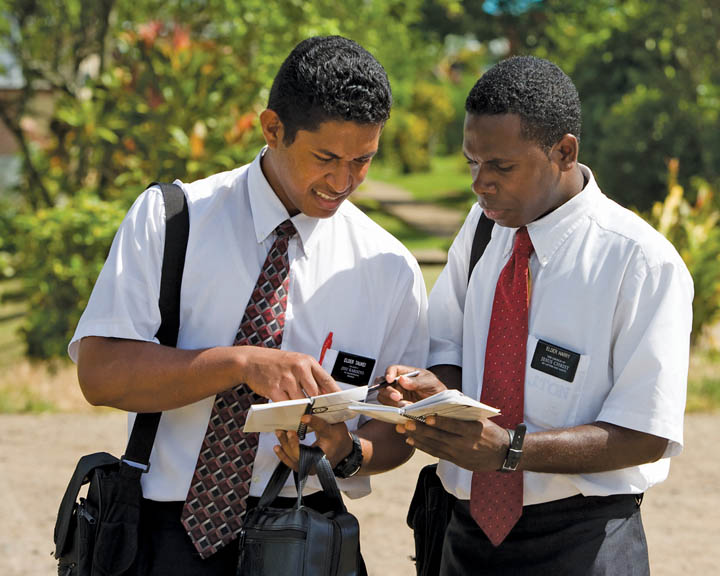 While successful missionary work for rank-and-file members is worthy of its own post, this post is aimed at full-time missionaries. What makes me qualified to comment on this topic? Well, I served two years as a full-time missionary for the church in Norway (the land of the chosen frozen) some years ago. I currently have a son on a mission. And I just finished reading this article by Jason Wright.
To be quite honest, I have struggled with whether I was very successful as a missionary or not. I served faithfully. But I wasn't immune to slacking a bit when I should have been street contacting.
I've never been much good at sales and its attendant skills. It was one thing to ring people's doorbells day after day, only to be turned away 99 out of 100 times. But I just hated accosting people on the street and talking to them about my religion.
I didn't mind being at a display where others initiated the conversation, even when they were simply there to argue. But initiating the contact without the kinds of safety barriers offered by doors or pavilions discombobulated me. I'm still that way when it comes to anything; even things that I feel strongly about.
If you measure missionary success by baptisms, I was not a successful missionary. But I suspect that the Lord measures success differently. This has repeatedly been impressed upon me as from afar I have watched my missionary son go through many of the same kinds of experiences I had back in the day.
So, what does Wright tell us are the keys to successful missionary work? Four of his eleven tips involve obedience. This might seem obsessive, but Wright says, "Obedience is the only frequency that the Spirit operates in." One cynical commenter says, "We are a church, not a corporation." I note, however, that Pres. Monson's premier speech at April general conference focused on obedience.
Wright claims, "You are unlikely to meet returned missionaries who were obedient but still regret their missions. But you will certainly encounter others who were never consistently obedient and never found the promised success and happiness." Anecdotally I'd say this seems right, but I don't know what a real study would find.
Wright's other tips include avoiding being judgmental, serving your companions, giving praise, loving others, exercising faith, loving your mission, and being yourself. One commenter adds that the willingness to work hard is indispensable.
 My score on these points as a missionary is a mixed bag. I did great at some and less so at others. I was likely so enamored over my callings to serve in various leadership positions that I couldn't look far enough outside of my me-box to properly love others as I should have. And let's just say that being judgmental has always been one of my stronger traits. (One that I have tried to tame.)
I particularly appreciate Wright's admonition to be yourself. Over my young life I had developed a mental image of what a good missionary was like. At the outset of my mission I tried very hard to follow every rule. I was very much a letter-of-the-law kind of guy. And I knew how to work hard.
In the MTC I became a Norwegian-learning, discussion-learning machine. (Yeah, we memorized the lessons back then.) In fact, some of my fellow missionaries as well as our instructors wondered if I was a machine and questioned whether I had any personality at all.
I continued trying to be the perfect missionary during my first month in Norway. Then I got a new companion. After a couple of weeks he sat me down and told me to lighten up. I still remember him saying, "Elder, God blessed you with a personality. You're not supposed to hide it under a bushel; you're supposed to let it out and use it to do his work. You've got to quit being a cardboard cutout of a missionary and show your gratitude to God by openly using the gifts he has given you."
A couple of weeks later, one of our investigators turned to my companion and asked, "What have you done to him? He used to be so stiff and now he's wonderful." I learned that reverence has its appropriate place and that excess rigidity stifles the Spirit. You don't have to have a long face to be spiritual.
No, I don't regret my mission at all. It was a magnificent experience that brought extremely valuable learning and experiences that could have come in no other way. I was far from the perfect missionary, but then again, who isn't?
Wright's list of missionary tips isn't exhaustive. And some points certainly seem more valuable than others. But you won't go wrong by following his advice.
What would your list of advice for full-time missionaries look like?
To be quite honest, I have struggled with whether I was very successful as a missionary or not. I served faithfully. But I wasn't immune to slacking a bit when I should have been street contacting.
I've never been much good at sales and its attendant skills. It was one thing to ring people's doorbells day after day, only to be turned away 99 out of 100 times. But I just hated accosting people on the street and talking to them about my religion.
I didn't mind being at a display where others initiated the conversation, even when they were simply there to argue. But initiating the contact without the kinds of safety barriers offered by doors or pavilions discombobulated me. I'm still that way when it comes to anything; even things that I feel strongly about.
If you measure missionary success by baptisms, I was not a successful missionary. But I suspect that the Lord measures success differently. This has repeatedly been impressed upon me as from afar I have watched my missionary son go through many of the same kinds of experiences I had back in the day.
So, what does Wright tell us are the keys to successful missionary work? Four of his eleven tips involve obedience. This might seem obsessive, but Wright says, "Obedience is the only frequency that the Spirit operates in." One cynical commenter says, "We are a church, not a corporation." I note, however, that Pres. Monson's premier speech at April general conference focused on obedience.
Wright claims, "You are unlikely to meet returned missionaries who were obedient but still regret their missions. But you will certainly encounter others who were never consistently obedient and never found the promised success and happiness." Anecdotally I'd say this seems right, but I don't know what a real study would find.
Wright's other tips include avoiding being judgmental, serving your companions, giving praise, loving others, exercising faith, loving your mission, and being yourself. One commenter adds that the willingness to work hard is indispensable.
My score on these points as a missionary is a mixed bag. I did great at some and less so at others. I was likely so enamored over my callings to serve in various leadership positions that I couldn't look far enough outside of my me-box to properly love others as I should have. And let's just say that being judgmental has always been one of my stronger traits. (One that I have tried to tame.)I particularly appreciate Wright's admonition to be yourself. Over my young life I had developed a mental image of what a good missionary was like. At the outset of my mission I tried very hard to follow every rule. I was very much a letter-of-the-law kind of guy. And I knew how to work hard.
In the MTC I became a Norwegian-learning, discussion-learning machine. (Yeah, we memorized the lessons back then.) In fact, some of my fellow missionaries as well as our instructors wondered if I was a machine and questioned whether I had any personality at all.
I continued trying to be the perfect missionary during my first month in Norway. Then I got a new companion. After a couple of weeks he sat me down and told me to lighten up. I still remember him saying, "Elder, God blessed you with a personality. You're not supposed to hide it under a bushel; you're supposed to let it out and use it to do his work. You've got to quit being a cardboard cutout of a missionary and show your gratitude to God by openly using the gifts he has given you."
A couple of weeks later, one of our investigators turned to my companion and asked, "What have you done to him? He used to be so stiff and now he's wonderful." I learned that reverence has its appropriate place and that excess rigidity stifles the Spirit. You don't have to have a long face to be spiritual.
No, I don't regret my mission at all. It was a magnificent experience that brought extremely valuable learning and experiences that could have come in no other way. I was far from the perfect missionary, but then again, who isn't?
Wright's list of missionary tips isn't exhaustive. And some points certainly seem more valuable than others. But you won't go wrong by following his advice.
What would your list of advice for full-time missionaries look like?
Wednesday, August 07, 2013
Callings By Inspiration VS Callings By Desperation
I have often heard LDS Church members half jokingly talk about callings by inspiration vs. callings by desperation. I once heard a sister after using those words say that every time she was called to fill a church position, she boldly confronted the calling authority demanding precisely how he knew she was supposed to receive the calling.
 I believe that this type of thinking represents a fundamental misunderstanding of the doctrine of callings in the church and what church leaders mean when they talk about callings coming from the Lord. It further misconstrues the doctrine of sustaining church members in their callings.
Article of Faith #5 states that church members "must be called of God, by prophecy ... by those who are in authority...." Handbook 2, section 19.1.1 states that "Leaders seek the guidance of the Spirit in determining whom to call."
No one should expect the spirit of prophecy and guidance from the Spirit to occur any differently for callings than it does on any other issue in life. Elder Dallin H. Oaks has an article in the August 2013 Ensign on the workings of revelation. His points include:
 Rather, it is entirely appropriate for you to prayerfully receive your own revelation regarding whether you are being called of God or not. And while leaders (being imperfect people) are not above reproach, directly challenging calling authorities as default behavior seems to fly in the face of the covenant to sustain them in their callings.
In line with Elder Oaks' teaching on the rarity of exceptional spiritual events, we should not expect that the bishop have the heavens opened to him every time he or one of his counselors calls a ward member to fill a position. Rather, we should expect overpowering revelation to be rare.
The bishop will have listened to the quiet whisperings of the Spirit that bring a sense of enlightenment and rightness to the calling. Or he will have moved forward using his best judgment, having not been told no by the Spirit. At least, that's how it has worked when I have served in callings where I was among those that have had responsibility for determining and issuing callings.
It really doesn't matter which spiritual method the Lord uses to help his servants develop church assignments; "whether by mine own voice or by the voice of my servants, it is the same" (D&C 1:38).
 It is acceptable to harbor some distrust of fallible humans that believe or act as if they have authority from God. For this reason, each church member has the ability to seek their own revelation regarding whether a calling comes from the Lord or not. After all, if you don't trust someone enough to properly issue a calling, why should you trust them to tell you how they received revelation? Go ahead and find out for yourself directly from the source. Such an answer could take time. It may even require working faithfully in the calling for a while.
I have had callings that I have loved and callings that I have hated. I have had callings that I initially hated that I learned to love. But every calling has been from the Lord, and fulfilling those callings to the best of my meager abilities has blessed my life beyond measure.
Releases come by inspiration from the Lord too. Years ago I both loved and hated my calling as scoutmaster. It was very fulfilling and I learned much. But support was hit-and-miss, making it difficult to effectively run a troop with nearly two dozen boys.
A couple of years into the calling I counseled with the bishop about some health problems I was experiencing related to my Multiple Sclerosis condition. After confidentially counseling with my wife about the matter, the bishop decided to replace me as scoutmaster (a process that took about three months). I had not asked to be released. I wanted to do the calling. But when the release came, I knew inside that it was right.
No doubt bishoprics sometimes find themselves scrambling to fill positions in the ward. Sometimes it can seem like callings occur out of desperation, even (especially?) to members of the bishopric. But when the process for seeking revelation as outlined by Elder Oaks is followed and callings (and releases) are properly handled, all will be in accordance with accepted doctrine, even if no spectacular heavenly manifestation has occurred. And of course, the person being called is fully authorized to receive and follow their own revelation on the matter, providing for a system of divine checks and balances.
Is a calling from the Lord? You decide. But in light of your covenants, you also are responsible for your decision. That is the Lord's way.
I believe that this type of thinking represents a fundamental misunderstanding of the doctrine of callings in the church and what church leaders mean when they talk about callings coming from the Lord. It further misconstrues the doctrine of sustaining church members in their callings.Article of Faith #5 states that church members "must be called of God, by prophecy ... by those who are in authority...." Handbook 2, section 19.1.1 states that "Leaders seek the guidance of the Spirit in determining whom to call."
No one should expect the spirit of prophecy and guidance from the Spirit to occur any differently for callings than it does on any other issue in life. Elder Dallin H. Oaks has an article in the August 2013 Ensign on the workings of revelation. His points include:
- Revelation comes to those that are qualified to receive it.
- Revelation comes on the Lord's timetable and in the Lord's way; not on our terms.
- Revelation most often comes when we are actively doing our part.
- Revelation often comes by enlightenment and peace (i.e. quiet whisperings) rather than in a bold manner. Exceptional spiritual events happen, but they are exceptional because they are rare.
- In the lack of clear direction we "are often obliged to act upon our best judgment, subject to the Spirit’s restraining impressions if we have strayed beyond permissible limits."

In line with Elder Oaks' teaching on the rarity of exceptional spiritual events, we should not expect that the bishop have the heavens opened to him every time he or one of his counselors calls a ward member to fill a position. Rather, we should expect overpowering revelation to be rare.
The bishop will have listened to the quiet whisperings of the Spirit that bring a sense of enlightenment and rightness to the calling. Or he will have moved forward using his best judgment, having not been told no by the Spirit. At least, that's how it has worked when I have served in callings where I was among those that have had responsibility for determining and issuing callings.
It really doesn't matter which spiritual method the Lord uses to help his servants develop church assignments; "whether by mine own voice or by the voice of my servants, it is the same" (D&C 1:38).

I have had callings that I have loved and callings that I have hated. I have had callings that I initially hated that I learned to love. But every calling has been from the Lord, and fulfilling those callings to the best of my meager abilities has blessed my life beyond measure.
Releases come by inspiration from the Lord too. Years ago I both loved and hated my calling as scoutmaster. It was very fulfilling and I learned much. But support was hit-and-miss, making it difficult to effectively run a troop with nearly two dozen boys.
A couple of years into the calling I counseled with the bishop about some health problems I was experiencing related to my Multiple Sclerosis condition. After confidentially counseling with my wife about the matter, the bishop decided to replace me as scoutmaster (a process that took about three months). I had not asked to be released. I wanted to do the calling. But when the release came, I knew inside that it was right.
No doubt bishoprics sometimes find themselves scrambling to fill positions in the ward. Sometimes it can seem like callings occur out of desperation, even (especially?) to members of the bishopric. But when the process for seeking revelation as outlined by Elder Oaks is followed and callings (and releases) are properly handled, all will be in accordance with accepted doctrine, even if no spectacular heavenly manifestation has occurred. And of course, the person being called is fully authorized to receive and follow their own revelation on the matter, providing for a system of divine checks and balances.
Is a calling from the Lord? You decide. But in light of your covenants, you also are responsible for your decision. That is the Lord's way.
Monday, August 05, 2013
How to Get Lost In the Wilderness
I recently spent time at a Boy Scout camp situated in a remote back country area. The director and program director told me the tale of a lost camper. This story thankfully has a happy ending. I will recite the story as I understand it.
A couple of weeks ago a man in his early 50s (old enough to know better) was at camp with his scout troop. His actions offer a textbook example of how to get lost in the back country. Here are the basic steps:
1) Don't tell anyone what you are doing or where you are going.
The man awoke early one beautiful morning and decided to do a little exploring. Not wanting to bother his fellow campers, he quietly slipped out of camp. He didn't bother to leave a note or anything like that because he wasn't going far. He would be back in time for breakfast.
2) Hike alone.
Since the man was only going a short distance outside of camp, he wouldn't need a buddy. Besides, no one was awake to go hiking with him and he was a relatively avid hiker.
3) Have no plan.
The man really didn't have a destination. He just wanted to explore some of the beautiful region near the camp.
4) Hike in an area with which you are unfamiliar.
Familiarity with the area was unnecessary, or so the man thought. After all, wouldn't he always be able to find the great depression in the landscape that denoted the location of the lake adjacent to the camp?
4a) For extra credit, make sure to hike in an area infested with bear wallows.
5) Take no navigational tools with you.
GPS. Map and compass. Why would such things be needed for such a short hike?
6) Take no provisions with you.
Why take food and extra water when you're going to be back in time for breakfast?
7) Once you realize you are lost make sure to keep hiking.
The man felt quite foolish the moment he realized he was lost because he knew that he had broken almost every hiking safety rule. Since he was on a roll, he decided to break one more. Rather than stay put, he kept hiking around. And around. And around in a circular pattern. Heck, the dense forest all looked the same. How was he to know he was going in circles? And where the heck was that lake?
Some eight hours after the man left, members of his unit came to the camp office and said that they hadn't seen the man all day. Thanks to an updated communication system, forest service rangers and county search and rescue crews were soon involved in the search. Since no one had any idea of what had happened, they began at the man's campsite and started branching out.
One crew came upon a black bear sow that was unusually aggressive. (These were people that were experienced in dealing with bears.) They assumed that she was guarding a carcass, perhaps that of the missing camper. Thankfully, that turned out not to be the case.
About 29 hours after the man first left camp, he was returned safely by a crew that had located him a mile and a half from one shore of the lake. Since he didn't stay put once he realized he was in trouble it took search crews extra time to find him.
Earlier in the summer the camp had (much more briefly) lost another camper who ended up being located by helicopter. As in the case above, many rules had been broken. But at least this camper had the excuse of being just a kid.
The wilderness is a beautiful but dangerous area. It really is infested with wild beasts that can be hazardous to humans. More so for humans that fail to follow basic safety procedures. But campers themselves are often their own worst enemies when it comes to back country safety.
The real rules are actually quite simple:
And if you do get lost, "hug a tree." Stay in one place. Make irregular sounding noises. Hiking whistles are nice, but the sound carries only so far. Whacking on a tree or a log can help, but only if you do it in a pattern that no one would suspect as being naturally occurring. Try to keep yourself in an area with some exposure so that you can more easily be seen by searchers.
Some have suggested starting a fire when lost. That can help if you make it smoky enough. But remember to use proper fire safety because burning down the forest is a bad idea even if it brings fire crews. Being lost is bad enough without having to try to escape from a wild fire that can move at speeds of up to 80 mph.
Of course, the number one rule is DON'T GET LOST! Countless hikers traverse the back country each season without getting lost. A few simple precautions can help ensure that you are not among the unfortunate few that do.
A couple of weeks ago a man in his early 50s (old enough to know better) was at camp with his scout troop. His actions offer a textbook example of how to get lost in the back country. Here are the basic steps:
1) Don't tell anyone what you are doing or where you are going.
The man awoke early one beautiful morning and decided to do a little exploring. Not wanting to bother his fellow campers, he quietly slipped out of camp. He didn't bother to leave a note or anything like that because he wasn't going far. He would be back in time for breakfast.
2) Hike alone.
Since the man was only going a short distance outside of camp, he wouldn't need a buddy. Besides, no one was awake to go hiking with him and he was a relatively avid hiker.
3) Have no plan.
The man really didn't have a destination. He just wanted to explore some of the beautiful region near the camp.
4) Hike in an area with which you are unfamiliar.
Familiarity with the area was unnecessary, or so the man thought. After all, wouldn't he always be able to find the great depression in the landscape that denoted the location of the lake adjacent to the camp?
4a) For extra credit, make sure to hike in an area infested with bear wallows.
5) Take no navigational tools with you.
GPS. Map and compass. Why would such things be needed for such a short hike?
6) Take no provisions with you.
Why take food and extra water when you're going to be back in time for breakfast?
7) Once you realize you are lost make sure to keep hiking.
The man felt quite foolish the moment he realized he was lost because he knew that he had broken almost every hiking safety rule. Since he was on a roll, he decided to break one more. Rather than stay put, he kept hiking around. And around. And around in a circular pattern. Heck, the dense forest all looked the same. How was he to know he was going in circles? And where the heck was that lake?
Some eight hours after the man left, members of his unit came to the camp office and said that they hadn't seen the man all day. Thanks to an updated communication system, forest service rangers and county search and rescue crews were soon involved in the search. Since no one had any idea of what had happened, they began at the man's campsite and started branching out.
One crew came upon a black bear sow that was unusually aggressive. (These were people that were experienced in dealing with bears.) They assumed that she was guarding a carcass, perhaps that of the missing camper. Thankfully, that turned out not to be the case.
About 29 hours after the man first left camp, he was returned safely by a crew that had located him a mile and a half from one shore of the lake. Since he didn't stay put once he realized he was in trouble it took search crews extra time to find him.
Earlier in the summer the camp had (much more briefly) lost another camper who ended up being located by helicopter. As in the case above, many rules had been broken. But at least this camper had the excuse of being just a kid.
The wilderness is a beautiful but dangerous area. It really is infested with wild beasts that can be hazardous to humans. More so for humans that fail to follow basic safety procedures. But campers themselves are often their own worst enemies when it comes to back country safety.
The real rules are actually quite simple:
- Have a plan for where you are headed and when you will be back. Share the plan with responsible parties (that are not hiking with you and can get help if you don't return on time).
- Take a buddy.
- Either hike in area familiar to you, hike with someone that is familiar with the area, or take navigational tools that you know how to use. Or all of the above.
- Take communication tools (if you have any hope of using them effectively).
- Avoid areas with high populations of dangerous animals (like bear wallows).
- Take extra provisions and water with you.
And if you do get lost, "hug a tree." Stay in one place. Make irregular sounding noises. Hiking whistles are nice, but the sound carries only so far. Whacking on a tree or a log can help, but only if you do it in a pattern that no one would suspect as being naturally occurring. Try to keep yourself in an area with some exposure so that you can more easily be seen by searchers.
Some have suggested starting a fire when lost. That can help if you make it smoky enough. But remember to use proper fire safety because burning down the forest is a bad idea even if it brings fire crews. Being lost is bad enough without having to try to escape from a wild fire that can move at speeds of up to 80 mph.
Of course, the number one rule is DON'T GET LOST! Countless hikers traverse the back country each season without getting lost. A few simple precautions can help ensure that you are not among the unfortunate few that do.
Tuesday, July 30, 2013
Missionaries, Flies, and Honey
The LDS Church has recently stepped up its missionary efforts. The lowering of the minimum age for young people to serve missions has led to a significant increase in the number of missionaries from about 52,000 to more than 70,000. Some estimates suggest that the number could peak at around 100,000.
The church has long emphasized that the responsibility for finding new investigators for the full-time missionaries to teach rests on the rank-and-file members. But this has not changed the fact that full-time missionaries spend most of their time finding new investigators rather than teaching. Without a change in the practices of the membership, adding more missionaries would mean missionaries spending yet more time finding people to teach.
The church recently invited stake and ward leaders to a two-hour broadcast called The Work of Salvation. The broadcast clearly conveyed the message that stake and ward councils have the primary responsibility of helping rank-and-file members fill the calendars of full-time missionaries with teaching appointments. They are to develop and carry out plans. The full-time missionaries are there to help the members fulfill their responsibilities.
Our son writes from overseas that this message has been received with marginal enthusiasm in the small branch where he is serving. Some of the branch leaders don't see themselves being much able to develop teaching prospects for the missionaries.
Last Sunday the full-time sister missionaries serving in our stake spoke in our ward sacrament meeting. They came to our area just recently and found little in the way of prospects. So they have been spending most of their time going door-to-door contacting people with little success.
The message these lovely sisters gave consisted mainly of 1) whining about long days of door-to-door contacting in the hot summer weather with poor results and 2) being critical of local church members for failing to adequately fill the sisters' appointment book. Unfortunately, it was kind of an "it's all about us" approach.
I have been a young missionary in a tough area. All of my areas in Norway were tough areas. We expended endless hours contacting people in an attempt to develop teaching appointments. These efforts were occasionally interspersed with actual teaching appointments. On extremely rare occasions, those appointments involved members inviting us to teach their friends, neighbors, or acquaintances. My companions and I saw a lot of work without much success. I understand what missionaries like my son and these sisters are experiencing.
But I have also been a rank-and-file church member for a long time. My neighbor that moved here from out of state said that he was surprised to discover that in Utah there is an unwritten social contract that says that LDS Church members generally refrain from overtly evangelizing about the church to others. While this takes the rough edges off social interactions, it tends to create an us-vs-them mentality for those in and out of the church. Active church members tend to socialize with active church members, so they don't have a lot of non-member or less active friends for the missionaries to teach.
The average Utah Mormon, when asked to think of friends and family members that could benefit from meeting with the missionaries, draws a blank. They all know people that should hear the Gospel message, but they also know that most of these people have already been approached plenty of times and have more or less indicated that they don't want to be bothered about it.
Our local sister missionaries said that church members often ask what they can do for the missionaries. The implication is that these members are willing to drive them places, feed them, supply clothing and other needs, etc. When the sisters respond, "Please give us some names of people we can teach," the members stammer, hem and haw.
Living in a predominantly LDS area, I can glance through all of the addresses in my ward and tell you who is active in the church, who is kind of active in the church, who is a member but is not currently active in the church, and who is not a member of the church. The missionaries could visit all of those in the latter two categories in our ward in one or two evenings without getting a teaching appointment. Multiply that by all of the wards in our stake and the missionaries could fill two to four weeks of evenings, likely without much success.
Another challenge where ward, stake, and missionary area boundaries are small is that the prospects members have often live outside of the missionary area where they live. Sometimes outside of the mission boundaries. This makes it hard to fill the local missionaries' calendars unless the prospects come to the member's home to be taught.
Yet another challenge is the fact that my entire stake is part of a bedroom community. People vacate the area to go to work, school and activities during the day, making it hard to provide daytime appointments for the missionaries. Evenings are busy as families grapple with church, community, school, and social commitments.
I'm not saying that missionary work is not possible where I live. I'm saying that an area like ours presents certain challenges to the kind of robust missionary work these sister missionaries would like to be doing. Members are not unwilling; they just don't know how to improve on what they are currently doing.
Given this situation, I feel that the good sister missionaries had a great message, but went about delivering it in a way that likely generated less cooperation rather than more. Instead of whining about tedious work and berating members for their inadequacies, it would probably have been better to focus on the joy and exhilaration that comes from sharing the gospel with friends and family, explaining ways to do that within the regular course of a busy life, and describing where the missionaries can help.
The old adage about honey attracting more flies than vinegar is applicable here. Helping members focus on the great blessings in store for them and encouraging them to feel that they can actually do the work is certain to bring a better response than complaining about the failure of people to achieve the ideal.
That's a lot to ask of young missionaries that are doing tedious and mundane work day after day without generating much interest in their message. After all, even the great missionary Paul was not immune to grousing and remonstrating on occasion. But he also gloried in his trials for Jesus' sake and frequently sent encouraging messages. I hope that our local sister missionaries, my son abroad, and other missionaries learn to use more honey and less vinegar when working with members.
Monday, July 29, 2013
Why Do Politicians Insist That They are Not Professionals?
Why is it so common for those engaged in the profession of politics to deny that they are professional politicians? In what other line of work do professionals assert that they are simply amateurs?
I guess this phenomenon also occurs at certain levels of athletics. While Olympic level competition has given way to openly admitting professional athletes, we continue to ridiculously insist that all collegiate athletes are amateurs. It might be somewhat common for drug pushers and prostitutes to deny that they are professionals to law enforcement officials, but probably not to their customers.
The denial of one's own professionalism is never or almost never seen in fields like medicine, education, business, entertainment, finance, technology, etc. Even if there were no laws about who could perform surgery, you wouldn't see some guy openly advertising that he wants to be your surgeon, despite being an amateur. But politicians do this kind of thing all of the time, asserting that they are political outsiders.
So what is different about politics, some athletics, and illegal activities that make people deny that they are professionals? It would seem that each of these parties has something to gain by such a denial. Crime professionals are obviously seeking leniency. College athletes are simply working within collegiate association rules that (wink, wink, nod, nod) seek to maintain an appearance of amateurism that all but the most gullible can easily see through.
Politicians assert non-professionalism to get voters and constituents to view the politician as one of their own—someone just like them that shares their same concerns and wants the same things. That is, they are attempting to blind their constituents to the reality that they have personal political incentives that dramatically differ from those that vote for them.
I once heard a local politician complain that he had many supporters when he was running for office that turned on him once he was elected. "I was their friend and hero when I was running against the incumbent. Now that I am in office they all treat me like the enemy," he said. "What is it about getting elected that turns someone into the enemy?" he asked.
While this politician couldn't understand the phenomenon, his erstwhile supporters did; at least subconsciously. They understood that once in office he would operate according to what he felt was best for him rather than what was best for them. He would discover, for example, that he had to grease the skids with the power brokers if he wanted any piece of legislation he created to have any chance of progressing.
The development of political relationships and the necessary exchange of favors creates incentives that ofttimes run counter to the interests of voters; although, the politician is expert at convincing himself that he is actually acting in the voters' best interests.
As long as these political activities do not raise too many hackles, the politician can hope to be re-elected or even elected to higher office. But the politician works in a dynamic system where things are constantly shifting. More than one politician has been surprised to have his career cut short when what he has always done suddenly hits the spotlight in a negative way due to factors beyond his control.
One of the common tools for hedging against this is for the politician to carefully market himself as a politically erudite amateur rather than a political professional. He doesn't have to really convince everyone that he is not a professional politician; just enough to ensure election.
A friend of mine ran for mayor when his city planned to widen the road adjacent to his home only on his side of the road. Much of his yard would have been consumed. Due to a number of factors, he ended up becoming mayor and having to learn what a mayor really does. Immersion in the political world was an eye opening experience. After getting his bearings, he found that he rather enjoyed it.
The voters booted my friend out of office the following election because they sensed that he had moved from concerned citizen to politician. Interestingly, he made a comeback four years later, posing once again as an outsider. But once back in office he again showed himself to be an insider. The voters demonstrated at the end of his second term that they had finally had enough of him.
Politicians don't always deny their profession. U.S. Senator Orrin Hatch, who initially ran as an outsider in 1976 garnered a seventh term mainly by running as an experienced Washington insider. The most adept politicians sense what the public wants to hear and market themselves accordingly.
Majestic rhetoric about politicians doing their civic duty is often bandied about to bolster the idea that politicians serve some kind of higher purpose than their constituents that spend their days working regular jobs and raising families. Some of the politicians might even believe it. But doing so will not stop them from acting in their own interest while in office, even if they tell themselves otherwise.
Political systems exist of necessity. Due to necessity they are staffed with politicians—politicians that act chiefly in their own interest. The wise voter will recognize these realities rather than believing mythical stories about political saints and saviors.
Monday, July 22, 2013
Returning to Civilization
I spent last week at Camp New Fork, a Boy Scout camp on the edge of the Wind River Range in Wyoming. I lost data coverage on my phone more than a dozen miles away from camp. I lost all coverage about three miles away from camp. All of the other adults with my troop continued to have both voice and data coverage in camp. But my employer-issued phone uses a sub par carrier. The first time I heard another leader's phone ring in camp I realized that being out of my provider's coverage area for a week was going to be a blessing.
Son #3, who has achieved the distinction of being the tallest member of the family (a title I believe he will maintain) participated in the camp's high adventure program. I spent the week shadowing my youngest son as he went to merit badge classes and activities. Despite serving as the troop's assistant senior patrol leader, his particular case of Asperger Syndrome renders it unlikely that he would complete all of the requirements for any badge without occasional one-on-one intervention. I sat around much of the time so that I could provide this assistance when needed.
Sometimes it's easy to know when to jump in. Other times, not so much. As I doggedly followed my son around the field archery range thinking that it should never be so hot in the mountains and cursing myself for leaving my water bottle at the campsite, I slowly learned to just stay in the background without offering any instruction or critique. Just making an occasional positive comment and helping retrieve arrows following each target turned out to be enough. Archery is a challenging merit badge. My son was on cloud nine when he completed the requirements at nearly the last possible minute on Friday afternoon. I remember his oldest brother doing something similar at Camp Aspen Ridge nine years ago.
We were pleasantly surprised at the low number of biting flies, something that is quite unusual for that area this time of year. I used repellent only once and sustained fewer than a dozen bites. But cattle range through the camp. They are mostly benign, except for the piles of excrement they leave behind and their frequent bellowing. Who knew that cows could be so darn loud (especially at night when you're trying to sleep)?
Most days were blazingly sunny and quite warm. Of course, we did get some rain. One evening we experienced a spectacular thunderstorm, complete with blinding lightening and torrents of rain. We stayed dry in our tent. The moisture reduced the dust for a day. Nights were cool and comfortable.
All of our 18 boys had a great time; although, I considered the program somewhat sub par compared to some other camps I have attended. Some of the more experienced staffers were away attending the BSA National Jamboree, leaving the staff short handed. After the Monday evening campfire, son #3, who has served on Camp Loll staff said, "That was no Camp Loll campfire program." How right he was. There were a number of faux pas throughout the week that belied a somewhat loosely run ship.
Still, the overall experience was pretty good. There was a troop in camp from Colorado and another from Reno. Despite the scout camp facilities available in their areas, both considered their Camp New Fork experience superior to their local camps.
I made friends with a strapping man in his 30s who had bold tattoos covering his arm. He offered some obviously expert archery advice to my son. The man is a Green Beret who was taking time away to spend a week at camp with his son. He described how he and his son stayed dry when they were camping at the other end of the lake on the overnight canoe hike when the thunderstorm hit. Scouting allows friendships like this to be built.
Camp New Fork has good quality dirt roads that run to each campsite and program area. The gate is kept closed, so access isn't open. But each troop gets to keep one vehicle parked at their campsite. This is a tremendous logistical benefit for loading, unloading, and storing scented items that are hard to store in the campsite bear box (such as grills greasy from years of scout camps).
When we finally got everything loaded up on Saturday morning, we headed home like horses heading back to the corral after being out on the trail. We made good time too. Until we ended up in a huge line of traffic stalled on I-80 due to a serious crash that killed two people. After waiting in 97° weather on the pavement for over an hour, we were diverted to a detour that consumed an additional hour, getting us home much later than expected. How grateful I was for the DVD system in my SUV that kept boys occupied during the delay.
Another week of scout summer camp is past. I have tried to count up all of the summer weeks I have spent at scout camps over the years. I think it's somewhere in the high 40s or maybe even low 50s. (That would be a year of scout summer camps.)
I am once again home. The gear is cleaned up and stowed. A number of boys have once again spent a week implementing the methods of scouting 24x7, hopefully further developing the character traits that lead to happy and virtuous lives. That, even more than the pleased look on my son's countenance as he told his mother of his triumphs at camp, is why I continue to go to scout camp.
Sunday, July 14, 2013
As cold waters to a thirsty soul, so is good news from a far country
A few weeks ago our missionary son, who is serving half a world away sent an interesting message. He and his companion went to the branch chapel to meet with a church member and an investigator. When they arrived they found a note written in English attached to the door from an American church member that happened to be traveling in the area. The note said that he said that he would return in an hour or so.
While our son was at the chapel, the American walked in. He had been spending summer semester studying in a neighboring country. After completing his coursework, he decided to travel to the city from which his ancestors hailed, which happened to be where our son is serving. The man, known as KC had served a mission in yet another country and spoke a different foreign language. But he didn't let that deter him from traveling in the area.
The missionaries and church members were able to direct KC to the places he was most interested visiting. He also joined my son and his companion from time to time over the succeeding days in doing missionary work. On one occasion KC was able to teach a fellow from yet a different country that happened to speak the same foreign language as him.
Our son excitedly sent pictures of KC and himself, explaining that KC was from our town and had graduated from the same high school as him. Despite a few years age difference, KC and our son had a number of common acquaintances.
A couple of nights ago, a tall young man came to our door and introduced himself as KC. We were thrilled to invite him into our home. He told us about his visit to the town where our son is serving and told us about how our son is doing. We spent about an hour talking with him, even showing him pictures from my son's mission and having him tell us who some of the people in the pictures were.
Perhaps only a missionary parent can understand what kind of joy this tender mercy brought us. The title of this post quotes Proverbs 25:25. Indeed, KC's visit to our family was like cold waters to thirsty souls.
Wednesday, July 10, 2013
Utah's High Teen Binge Drinking Rate Is Really a Low Binge Drinking Rate
News corporations like to foster the perception that they are all about objectivity and truth. In fact, all news organizations operate with a profit motive just like any other corporation. They slant, twist, embellish, and selectively report matters in ways designed to help them achieve greater profit. This is true as well for "nonprofit news organizations" that simply measure profit in in non-monetary terms.
A good example of sensationalistic misreporting was published in an AP News article published by the Standard Examiner under the title Less Utah teens drink booze, but those who do drink more.
We soon learn that this conclusion is drawn from a nationwide survey of high school seniors asking whether they drank alcohol in the last month and whether they engaged in binge drinking in the last month. But the shoddy reporting tells us nothing about how many teens were surveyed, the survey methodology, who commissioned the study (only that it was recently presented to Utah's Department of Alcoholic Beverage Control), the margin of error, or whether the survey has a history so as to reveal trends. Without this information you really know nothing about the validity of the numbers reported.
We learn in paragraph three that "of those Utah seniors who reported drinking, 72 percent said they had been binge drinking in the past month. That's significantly higher than the national average of 55 percent." That sounds pretty bad.
But wait. In paragraph two we learned that 17% of surveyed Utah high school seniors said that had drunk alcohol in the last month, compared to the national average of 40%. Let's apply some math to see how that actually works out.
U.S.: 40% * 55% = 22.00%
Utah: 17% * 72% = 12.24%
In other words, the national average of high school seniors that engage in binge drinking is nearly double Utah's rate. But the editor and the reporter chose to give the numbers a bad slant rather than a good slant. Why not? Sensationalism sells. I keep hearing Don Henley's 1982 song Dirty Laundry going through my head.
Of course, it could be that journalists are just bad at math. Or that teen binge drinking does not vary in direct proportion to teen alcohol consumption. Or that Utah high school seniors lie about their drinking habits at a higher rate than the national average. Self reporting is a notoriously faulty method of data gathering. But the numbers reported are not out of line with Utah's observable overall low rate of alcohol consumption, which most researchers feel is closely tied to social and cultural factors.
I'm not going to hold my breath waiting for news corporations to truly report straight news. Doing so generally runs counter to their ideological, financial, and power motives. But it pays to be aware of this so that one can better balance the 'news' that comes their way.
Monday, July 08, 2013
(Ir)Reverence, Please
We hold kneeling prayer together as a family every evening. We started this practice when we were first married and it has evolved over the years into a somewhat formal activity.
A wheel chart on the wall that tells whose turn it is to act as voice for the prayer. We begin by singing a religious song selected by whoever acted as voice for the previous evening's prayer. We kneel in a circle and hold hands as the prayer is voiced. Then we turn in our scriptures to where we left off the previous evening and each of us takes a turn reading a column. Then people go to bed.
Or more accurately, I go to bed. I get up in the wee hours of the morning to exercise before heading to my job, arriving at work before most people's alarms have gone off. Consequently I turn into a pumpkin pretty early in the evening.
I'm sure this makes it appear that our family is very spiritual. And on occasion we are. But more often our preparations for our evening devotional as well as the devotional itself are peppered with a great deal of irreverence, sniping, and decidedly un-Christ-like activities.
Half of the time the song picker takes longer to select a song than it takes to sing it. Or a song is picked that not everyone knows well enough to sing from memory. Or a song is selected that people are tired of singing. I mean, how often can you sing the Wise Man and the Foolish Man before you tire of it?
Despite my wish that everyone stay put during devotionals, family members continually develop excuses for wandering in and out of the family room during the event. People talk over each other or have private conversations during scripture reading. People (especially the youngest two) stare daggers at each other and make unkind remarks under their breath. Parents are sometimes overly critical of children that may be tired and cross. The list goes on.
I am relieved that even apostles have had similar challenges in their families. See Elder David A. Bednar's October 2009 general conference talk where he quotes his sons saying things like “He’s touching me!” “Make him stop looking at me!” “Mom, he’s breathing my air!” during family devotionals.
Quite frankly, sometimes I'm part of the problem. That was the case last night; although, this time my contribution was unwitting.
After finally getting everyone into the circle, one child brazenly broke wind. This resulted in gales of laughter from some family members and dramatic whole body recoils of disgust from others. As the cacophony died down, a second child boisterously contributed another dose of flatulence, eliciting laughter as well as drama worthy of a Shakespearean death scene.
As all of the hilarity and theatrics died down, I dispensed with my repeated calls for reverence and went to more direct instruction. "Close your eyes, close your mouths," and then referencing the recent gaseous outbursts I added, "close your butts."
I intended my admonition to be forthright with a slightly stern edge. However, it had the opposite effect. All of the other family members broke out in peals of laughter, as if I had said the funniest words ever spoken. I expressed my confusion as family members dabbed laughter tears from the corners of their eyes.
We eventually did get around to having family prayer and scripture study. Despite some irreverence during scripture reading, we actually had some decent discussion.
But, yeah, that's what family prayer is like at our house. Reverence is more like a journey than a destination—a journey whose end seems perpetually beyond the horizon.
Still, I hope that a lifetime of family prayer and scripture study will eventually, as Elder Bednar suggests, paint a good and worthy picture in the heart of each family member. With God as the master painter, how can it not?
Wednesday, July 03, 2013
An Increasingly Crowded Hometown Fourth
I can't remember the first time I attended the Independence Day parade in my town. The town has held it every year since a generation before I was born. For as long as I can remember the day's festivities have included activities in one of the city parks. The city hosts a full day of events starting with an early morning flag ceremony (where they always fire canon) and wrapping up with fireworks in the evening.
The summer I was 14 I marched with the high school marching band in the parade in the morning. Thinking back to how we sweltered in our formal black wool band uniforms, I am pleased to see that the bands nowadays dress far more appropriately for the summer temperatures.
Later that day I wanted to go to the activities in the park. But I couldn't find anyone to go with me. My two older brothers were away working in Hawaii. Two years later I would spend the summer planting pineapples in Hawaii, but that summer life was free and easy. Except for marching band practice many mornings and newspaper delivery in the afternoons.
My younger brother had other things he wanted to do that day and most of my friends were out of town. But I had newspaper delivery earnings to burn. So I hopped on my bike and rode a mile to to the park. It was the first time I had attended this event without being accompanied by family members.
I wasn't much interested in the annual baseball tournament. I was too big for the kiddie attractions. But I was intrigued by the food and by the event where the patrons paid a fee to bash up an old car with a sledge hammer. As I wandered through the attractions in the shade of the trees behind the baseball grandstand, I saw an artist drawing caricatures of people. I paid the princely sum of $5 for a cartoon image of me skiing.
Then I saw a stand where people were buying lemons with stick candy protruding from the fruit. The vendors would cut a hole in the lemon skin through which the stick candy was inserted. I was surprised to discover that lemon juice could be drawn through the stick candy like a drinking straw. You just kept squeezing the lemon and sucking the artificially sweetened naturally sour acidic liquid until the juice was gone. Then you'd eat the candy.
I'm not sure why that particular Fourth of July event stands out in my mind. After all, I have attended various of the city's Independence Day activities throughout my life. Sometimes I have been volunteering and other times I have simply been accompanying my kids. Maybe that year was something of a coming of age thing for me.
Another memorable Fourth of July was when our then four-year-old (whom we call our wandering child) got lost among the crowds at the parade. Thanks to former neighbors that recognized the family resemblance, we were reunited with our wanderer within 15 minutes. But that was a harrowing quarter of an hour.
Our town celebration still has a hometown atmosphere about it. In fact, that is the comment I hear most frequently from nonresidents that come to these festivities. They note that the parade consists mostly of offerings by local schools, businesses, and organizations, with only an occasional parade float. They find the Dutch oven cooking contest and the homegrown kiddie games charming.
While I don't begrudge others coming to our town to drink in the feeling, the sheer numbers of those that do so render the celebration less inviting. Parking for these events has become nightmarish. My family solves this problem by walking or cycling to the various venues. But once there, the press of the crowd limits enjoyment and threatens to sweep away the bucolic charm of which many attendees claim to be enamored. Maybe the problem is that I'm just not much of a crowd person.
I don't know whether I will end up at the parade tomorrow morning. That depends largely upon whether my youngest son goes back to bed (and how long he stays there) after we put up flags in the neighborhood early in the morning. I am not slated to volunteer at any of the other events this year, and we can easily enjoy the fireworks from our home after taking down flags in the evening. Depending on what the children want to do, we may end up avoiding the crowds altogether tomorrow.
Sunday, June 30, 2013
Burgers and Blessings
We cruised down I-15 toward the MTC. We planned to get lunch along the way and had scheduled enough time to stop for photos and last minute good-byes. It was sunny and relatively warm for November.
Through the rear view mirror I examined my son in the back seat of the car, looking for signs of anxiety. Decades earlier when I had made the same trip with my parents my father told me to lighten up because I was acting like a soldier right before going into combat for the first time. After all, many thousands had survived the MTC just fine. My son seemed to be in a state of heightened awareness, but didn't seem overly anxious.
My wife suddenly realized that she had failed to get postage stamps and stationary for our son. Seeing as she wanted him to write home—you know how moms are—we had to make a stop. I noticed an office supply store that was easily accessible from the adjacent freeway exit. I took the exit and drove to the store. It didn't take long to secure the needed supplies.
We then figured that it would work best if we ate lunch in that vicinity rather than making a second stop. We asked our son to pick from the multiple nearby dining establishments. He saw a Five Guys Burgers and Fries across the parking lot and he suddenly had a hankering for a gourmet burger.
Upon entering the burger place I saw a fellow that I recognized sitting down to lunch. But I couldn't quite place him. His face lit up as he asked, "Are you ... ?" We began an enjoyable chat. In the meantime we got our order and sat down to dine.
As we ate, our friend turned to my son and said, "I need to tell you a story about your grandfather." He explained that he suddenly felt that it was important for my son to hear this message. Years earlier as a teenager this man had visited my father to receive a patriarchal blessing.
At that time the young man was had been steadily dating a girl for quite awhile. Everyone in both of their families assumed that the two of them would someday wed. Indeed, during the blessing my father voiced some things about this man's future wife that seemed to apply to the young man's girlfriend. Among these comments was that the man's future wife was being raised in an "inactive" family. Indeed, his girlfriend was the only active church member among her immediate family members.
The following day the young man left on a long planned trip to Europe with an educational group. During the trip he became good friends with a young lady he had never previously met. His new friendship caused him to question facets of his relationship with his girlfriend.
During the young man's absence, my father delivered a printed copy of the patriarchal blessing to the young man's home. Soon after the young man returned home, he read this copy and was surprised to see that some of the wording regarding his future spouse had changed. Among other things, it said that she was being raised in a "loving" family rather than an inactive family. Other subtle changes made for a picture that didn't seem to match his girlfriend as much.
The changes bothered the young man so much that he visited my father and asked about it. Dad explained that English was not his native tongue, so that the words he said while speaking the blessing were not always the best fit for what the Spirit had spoken to his heart. He also said that a patriarch is allowed to receive revelation while preparing the printed copy of the blessing. Dad said that by the time he delivered the final copy, he was certain that the words were a close match for what the Spirit had told him.
Before long, this young man left to serve as a missionary for the church. The relationship with his girlfriend ended up not working out (as is often the case for missionaries that leave a girlfriend behind). About a year after returning from his mission, he ran into the girl he had met on his trip to Europe. They began dating and eventually married. He said that her family members were among the most loving people he had ever met.
As the story and our lunch wrapped up, the man told my son that he had no idea why he felt so strongly that my son needed to hear that story; only that it was important. As we climbed into the car, I wondered about the 'coincidence' of ending up in the same restaurant as this man so far from our homes. My son saw it as a tender mercy from the Lord.
Subscribe to:
Posts (Atom)